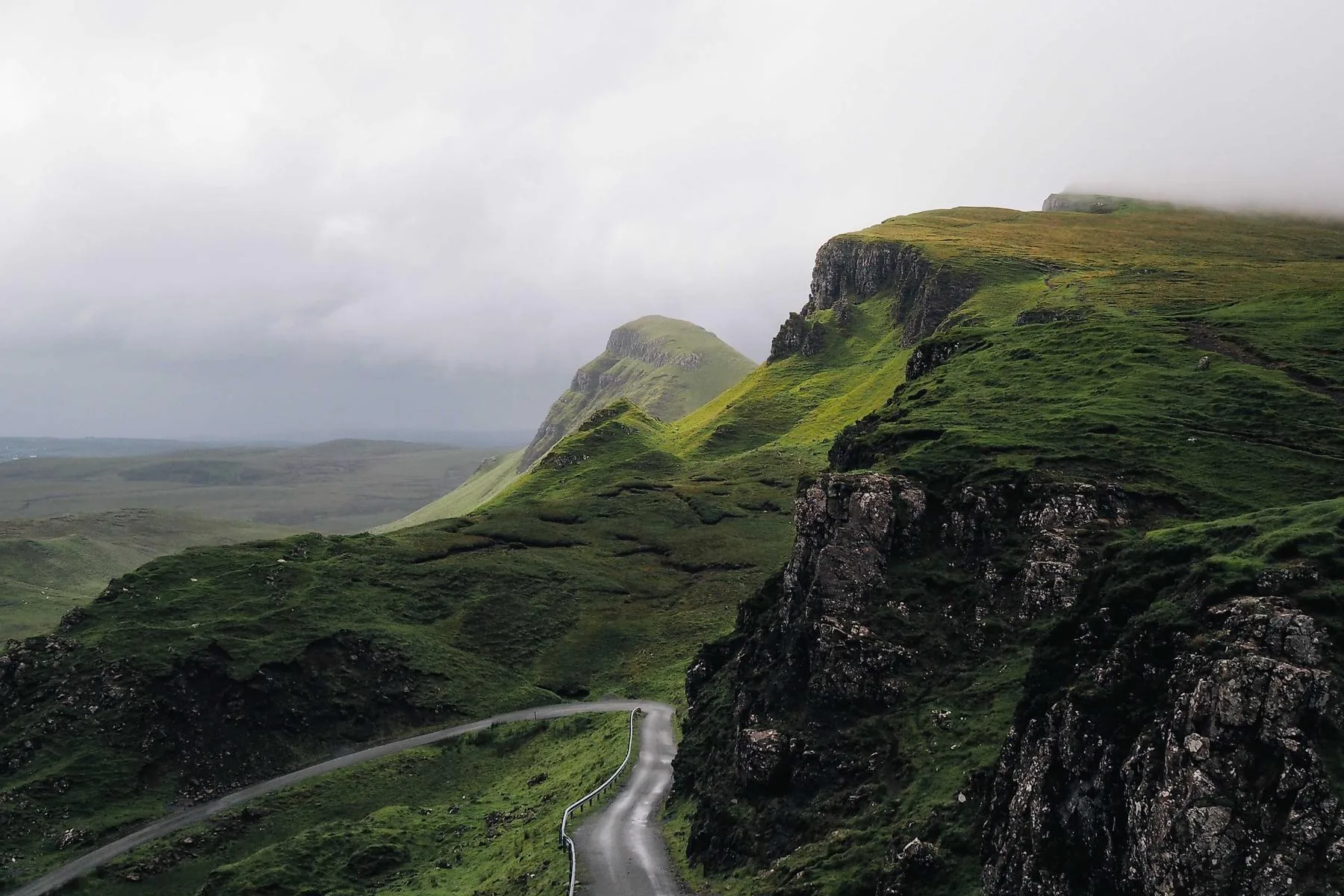
Walking the Edgeland
Between city and countryside lies a strange territory that nobody designed and everyone uses.
The edgeland is where the retail park meets the allotment. Where the footpath crosses the drainage ditch. Where the foxes live.
Defining the in-between
The term edgeland was popularised by the British writers Paul Farley and Michael Symmons Roberts in their 2011 book of the same name, though the concept it describes is as old as the city. Wherever urban development reaches its current limit, there is a zone that is neither city nor countryside - a territory shaped by convenience, neglect, and the accumulated decisions of people who were not planning anything.
These zones are called different things in different traditions: terrain vague in French urbanism, Zwischenraum in German, brownfield or wasteland in the language of planning. None of these terms captures the full character of the edgeland, which is not simply undeveloped but actively in-between - under pressure from both sides, inhabited by uses that formal space cannot accommodate.
What grows in neglect
The edgeland supports biodiversity that manicured urban and rural landscapes cannot. Brownfield sites - former industrial land left to regenerate - are among the most species-rich habitats in Britain. Invertebrates, reptiles, and birds colonise the rubble and pioneer vegetation of post-industrial ground. The diversity is a product of the absence of management.
This challenges the planning instinct, which tends towards legibility and control. Productive landscape is managed. Green space is maintained. The edgeland is neither. It is ungoverned in a way that most urban territory is not, and its ecological value is inseparable from that ungovernedness.
Desire lines
These territories have no planners and no advocates. They are shaped by desire lines - the paths worn into ground by feet making rational decisions about the shortest route between two points. A desire line is democracy expressed as geography. It says: this is where people actually want to go, regardless of where they are supposed to go.
Walking edgelands, you follow desire lines between formal paths. Through gaps in fences. Across corners of car parks. Along the strip of grass between a road and a wall. These routes are not signed. They exist because enough people found them useful to wear them into existence.
The fox question
The foxes live in edgelands because edgelands offer what foxes need: shelter, food, minimal human pressure. Urban foxes are adaptable and largely nocturnal, which means most people who live among them rarely see them. They are present in urban and peri-urban areas across Europe at densities that would surprise the people whose gardens and alleyways they move through.
The fox is a useful figure for the edgeland itself: thriving in the space between things, neither truly wild nor domesticated, indifferent to the categories that human planning applies to territory.
Walking as a method
Walking the edgeland requires a different kind of attention than either countryside walking or urban navigation. Not the aesthetic gaze of the countryside rambler, who is looking for views and wildlife and the picturesque. Not the purposive focus of the urban commuter. Something more like the forensic curiosity of the urban ecologist: attending to surfaces, junctions, signs of use and non-use.
What you find is usually unexpected. A cleared area that turns out to be a travellers’ site, recently vacated. A stretch of canal bank that has been transformed, informally, into a garden. A stand of buddleia - the butterfly bush, coloniser of disturbed ground across urban Britain - in full purple flower beside a corrugated iron fence.
These discoveries are not dramatic. They accumulate into a portrait of a territory that is genuinely inhabited, even when it appears empty. The edgeland is full of life that does not announce itself.
- ★★★★★
Desire lines as urban planning by democracy. This essay makes you look at scrubby patches of land completely differently.
- ★★★★★
The fox detail is perfect. These in-between places are so undervalued.
- ★★★★★
As a landscape architect I found this refreshing. Nobody writes about these places and they should.
Leave a review
Sample reviews above are demo content. On a Netlify deploy this form is collected with Netlify Forms; it does not appear in the list until you connect a CMS.

The Coastal Archive
A photographer's ten-year project documenting the changing edge of the North Sea coast.
Courtyard Hours
On the architecture of the in-between - the outdoor rooms that cities build without always meaning to.
Concrete and Coast
Brutalist holiday homes along the Adriatic - what happens when modernism meets salt air.