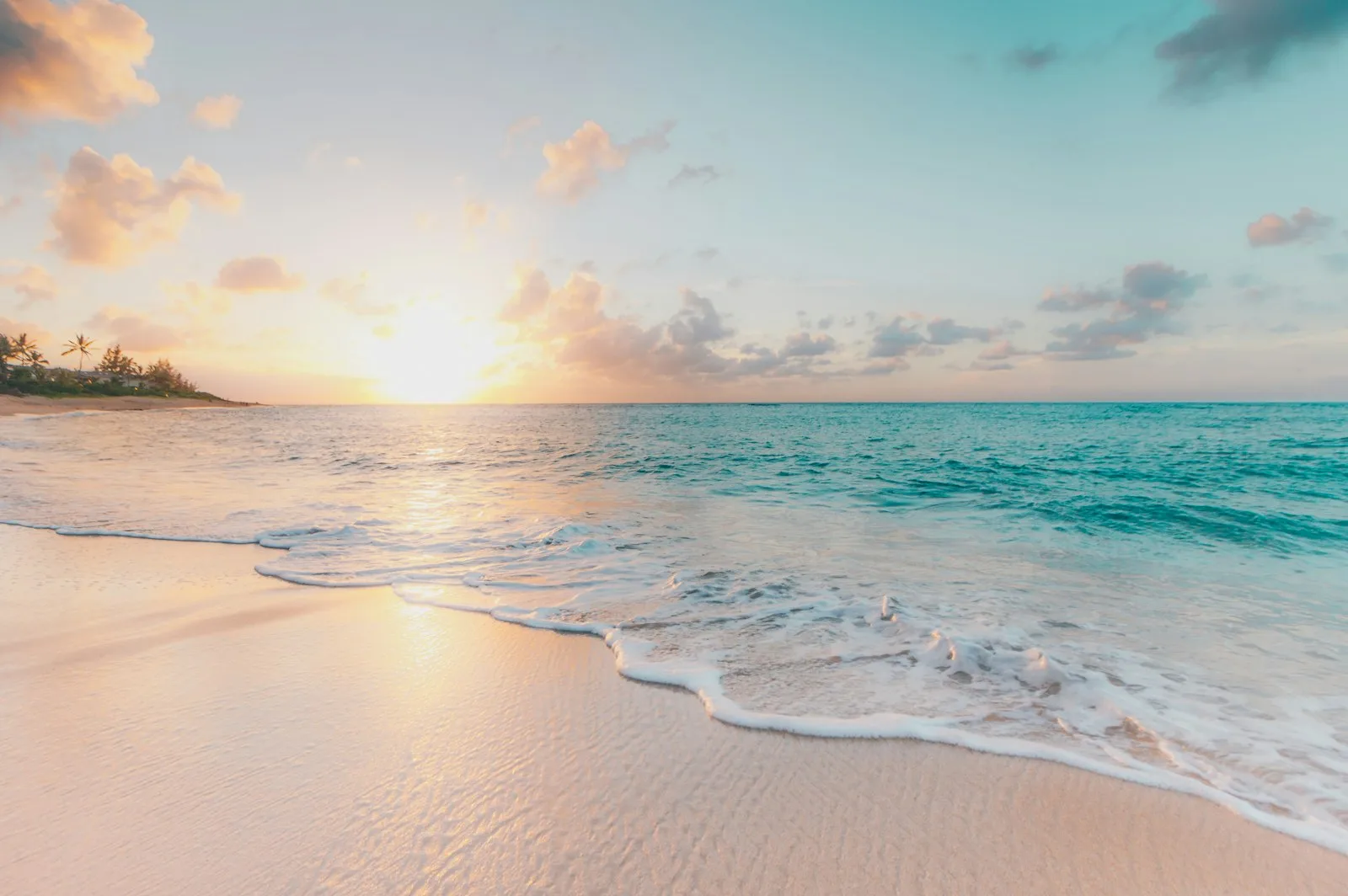
The Coastal Archive
A photographer's ten-year project documenting the changing edge of the North Sea coast.
The photograph Marcus Holt shows me first was taken in February 2014, on a morning after a storm that removed approximately three metres of the cliff edge along a stretch of the Holderness coast. The image shows a path that now ends in air.
The project
Holt has been photographing the same fifty-kilometre stretch of the North Sea coast - between Flamborough Head and Spurn Point in East Yorkshire - since 2015. He visits four times a year, in each season, and returns to the same vantage points each time.
“The project is about accumulation,” he says. “Any single image shows you a moment. What I am trying to document is change. And you cannot see change in a moment. You can only see it between moments.”
You cannot see change in a moment. You can only see it between moments.
He has approximately 8,000 images in the archive. He has printed, he estimates, forty of them.
The fastest-eroding coast in Europe
The Holderness coast erodes at approximately two metres per year on average, making it the fastest-eroding coastline in Europe. The rate varies - storm events can remove far more in a single night, while long stable periods see almost no change. But the direction of travel is consistent and irreversible.
Villages that appear on nineteenth-century maps as coastal settlements are now offshore. The lost village of Ravenser Odd, once a significant medieval port, is approximately two kilometres out to sea. The village of Skipsea has lost approximately thirty metres of its coastline in the last century. The cliff behind it, till rather than rock, erodes like sugar.
The photography of subtraction
Holt’s images are not dramatic in the way that coastal photography often is. There are no crashing waves, no spectacular sunsets, no moments of obvious crisis. What there is instead is a sustained attention to surfaces and absences - to what has gone and what has not yet gone.
“I am photographing something that is disappearing,” he says. “That changes what you notice. You start to attend to the edges of things. The boundary between what is stable and what is not.”
The salt air does something to the images that he has come to rely on. It softens the distance. Objects at the edge of the frame lose definition in a way that clean inland air does not produce. This atmospheric quality is not something he corrects for. It is part of what the coast looks like, and therefore part of what the photographs should look like.
The archive as argument
After ten years, Holt is beginning to understand the project as an argument as much as a document. The argument is not about climate change specifically, though the acceleration of coastal erosion in recent decades is connected to it. It is about the difficulty of perceiving change at the scales at which it actually occurs.
“We are not built to see geological time,” he says. “Even photographic time - years of images - is hard to hold in the mind. The archive makes it possible. You can put the 2015 image and the 2025 image side by side and see what happened.”
He is preparing a publication - a book, he thinks, rather than an exhibition, because the book format allows sequence and duration in ways that a gallery wall cannot. The book will contain sixty images, one from each seasonal visit, in chronological order. No captions. No text except the date and the coordinates.
What stays
Amid the loss, Holt has noticed what persists. The birds - gannets, fulmars, kittiwakes nesting in the cliffs - are indifferent to the geological crisis beneath them. The beach at the base of the eroding cliff is always full of material from the cliff above: boulders, timber, occasionally the remnants of a building. The sea sorts and re-sorts this material continuously.
“The coast is not disappearing,” he says. “It is changing shape. What disappears is our presence on it - the paths, the buildings, the evidence that people were here. The coast itself continues.”
He has one more image to show me: the same path from the 2014 photograph, taken in October 2024. The path ends three metres further from the edge than it did when the photograph was taken. Someone has moved the barrier. Someone is still maintaining the path, even as the destination continues to recede.
- ★★★★★
The photographs as a form of listening. That reframing alone makes this piece essential reading.
- ★★★★★
Quiet and accumulative, like the coastline itself. A strong addition to the archive theme.
- ★★★★★
As a photographer, the bit about salt air softening everything hit home. Beautifully observed.
Leave a review
Sample reviews above are demo content. On a Netlify deploy this form is collected with Netlify Forms; it does not appear in the list until you connect a CMS.
Courtyard Hours
On the architecture of the in-between - the outdoor rooms that cities build without always meaning to.

Borrowed Light
How architects and photographers chase the same fleeting quality - the light that belongs to a moment, not a room.
Concrete and Coast
Brutalist holiday homes along the Adriatic - what happens when modernism meets salt air.