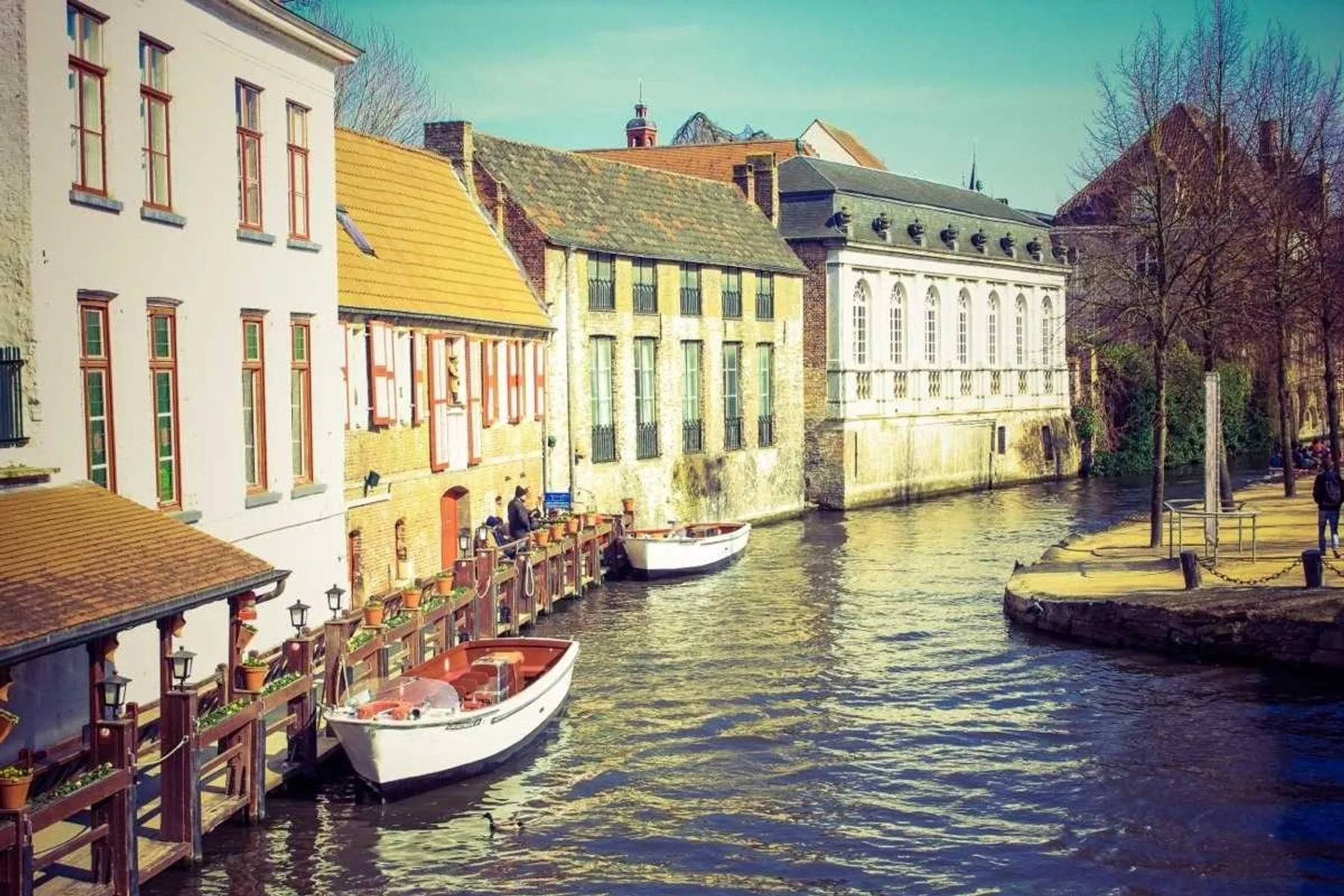
Secondhand Shelves
A tour of Europe's best used bookshops, where the stock is the architecture.
The shop in Porto has no catalogue. The owner knows where everything is, more or less, and considers that sufficient. The shelves reach the ceiling and lean slightly inward, as if conferring.
The anti-algorithm
Used bookshops are the opposite of algorithms. You find what you were not looking for. The adjacent possible is physical here - it is the book next to the book you picked up. It is the spine you notice while replacing something you have decided against. It is the section you pass through on the way to the section you came for.
Online book retail is optimised for knowing what you want. It is very good at this. What it cannot do is surprise you with something you did not know you needed. The recommendation engine works from your history. The secondhand shelf works from everyone’s history, scrambled together and left for you to unsort.
Porto: Livraria Bertrand’s opposite
Porto’s secondhand trade lives in the streets around the Ribeira and up into Cedofeita. The shops range from well-curated to frankly chaotic. The best ones are the chaotic ones. They have not been organised for the browser. They require actual engagement.
The owner of the shop I visit most often on the Rua de Ceuta knows his stock by proximity rather than system. Ask him for anything specific and he will walk to a shelf and find it within thirty seconds, passing three other sections without looking at them. The knowledge is spatial, not indexical. He is navigating a landscape he has memorised.
The bouquinistes of Paris
In Paris, the bouquinistes along the Seine are technically outdoor shops. In practice, they are furniture for the river - green metal boxes that open like cabinet doors to reveal a curated disorder of secondhand books, prints, postcards, and the occasional inexplicable object.
The bouquinistes have operated on the same stretch of quay since the sixteenth century, making them among the oldest retail institutions in Europe. They are listed as a UNESCO World Heritage element, which has not made them any easier to browse in a hurry. The wind off the river turns pages. The light changes constantly. Shopping here is a performance of patience.
Amsterdam and the principle of density
Amsterdam’s used bookshops are concentrated around the Spui and spread along the Kloveniersburgwal. The Dutch habit of displaying books in windows at street level means that browsing begins before you enter. The shop at Oudemanhuispoort operates in a covered passage - a former hospital corridor that now houses a permanent book market of extreme density.
The density is the point. When books are shelved three rows deep and stacked horizontally on top of vertical stacks, the act of browsing becomes archaeological. You are not looking for a book. You are excavating a collection.
What makes a good secondhand shop
Not every used bookshop is worth visiting. The distinction between a good one and a bad one is not primarily about stock, though stock matters. It is about attitude to the reader.
A good secondhand bookshop does not curate in the retail sense. It does not present you with a selection calculated to convert. It presents you with its entire personality - chaotic, opinionated, shaped by every acquisition decision made over decades - and trusts you to find what you need in it. This trust is the thing that makes the visit worth making.
The best ones feel like other people’s minds. You come out changed.
- ★★★★★
The shop in Porto sounds exactly like the one I found by accident last year. I love how this captured that feeling of serendipitous discovery.
- ★★★★★
The adjacent possible as a physical thing. Perfect description of what secondhand shops do that no algorithm can replicate.
- ★★★★★
Beautifully written. Made me nostalgic for a city I have never visited.
- ★★★★★
The bouquinistes line is wonderful. A rare piece of travel writing that earns its poetry.
Leave a review
Sample reviews above are demo content. On a Netlify deploy this form is collected with Netlify Forms; it does not appear in the list until you connect a CMS.

The Coastal Archive
A photographer's ten-year project documenting the changing edge of the North Sea coast.
Courtyard Hours
On the architecture of the in-between - the outdoor rooms that cities build without always meaning to.

Concrete and Coast
Brutalist holiday homes along the Adriatic - what happens when modernism meets salt air.