
The Colour of Concrete
Pigmented concrete is transforming facades across Scandinavia - a quiet revolution in surface.
Grey is not the only option. Iron oxide turns concrete the colour of terracotta. Chromium oxide makes it green. Carbon black makes it darker, denser, more serious.
The chemistry of colour
Concrete achieves its colour through mineral pigments integrated into the mix before pouring. Unlike paint, which sits on the surface and eventually fails, integral colour is distributed throughout the material. A chip or an abrasion does not reveal a different colour underneath. The surface and the interior are the same.
The range of colours achievable is broader than most architects realise. Beyond the familiar palette of warm greys and whites, pigmented concrete can achieve reds, oranges, yellows, greens, and near-blacks. The limiting factors are practical rather than chemical: cost, consistency across batches, and the interaction between pigment, cement, and aggregate.
Scandinavia’s concrete renaissance
In Stockholm, a housing block at Norra Djurgårdsstaden uses pigmented concrete in three shades of ochre. The effect is geological - the building looks like it was carved from sandstone rather than poured from a mixer. Seen in winter light, against snow, the colour has an unexpected warmth.
The project’s architect, Petra Lindström, chose the pigmentation specifically to avoid what she calls the “grey anonymity” of conventional concrete housing. “Concrete has a reputation for coldness that is largely about colour rather than material,” she told me. “Change the colour and people’s relationship to the material completely changes.”
Material honesty
What makes pigmented concrete different from cladding or applied finish is what it shares with concrete’s broader appeal: honesty. The material is not pretending to be something else. A terracotta-coloured concrete facade is not pretending to be terracotta. It is concrete that happens to be terracotta-coloured. The structure and the surface are one thing.
This distinction matters architecturally. Applied finishes fail at different rates from the structure beneath, creating maintenance problems and the particular ugliness of peeling cladding. Integral pigmentation ages with the material. It weathers, and weathering looks different from deterioration.
The weathering question
Concrete weathers. Rain water carries minerals to the surface and leaves deposits. Biological growth - moss, lichens, algae - colonises porous surfaces in damp climates. These processes can enrich or degrade colour depending on the pigmentation and the maintenance regime.
In Copenhagen, a cultural centre built in pigmented concrete in the early 2000s has developed a patina that the architects now consider an improvement on the original. The dark green of oxidised algae has merged with the original grey-blue pigmentation to produce something that could not have been designed. The building looks as if it grew there.
Simply refusing to be boring
The material is honest. It does not pretend to be anything other than concrete. It simply refuses to be boring.
This is not a small ambition. Most urban concrete is boring in the specific sense of being inert - it neither attracts nor repels, it simply occupies space. Pigmented concrete asserts that the material has aesthetic agency, that the choice of how to treat a surface is a genuinely significant one.
As Scandinavian cities continue to build densely in concrete - the material is unavoidable at urban scale - the question of what colour that concrete should be is becoming both more common and more consequential. The answer, increasingly, is not grey.
- ★★★★★
As a structural engineer I can tell you most people have no idea concrete comes in colours. This piece does the material justice.
- ★★★★★
The geological metaphor is spot on. That Stockholm housing block sounds extraordinary.
- ★★★★★
It simply refuses to be boring. What a closing line. What a subject.
Leave a review
Sample reviews above are demo content. On a Netlify deploy this form is collected with Netlify Forms; it does not appear in the list until you connect a CMS.
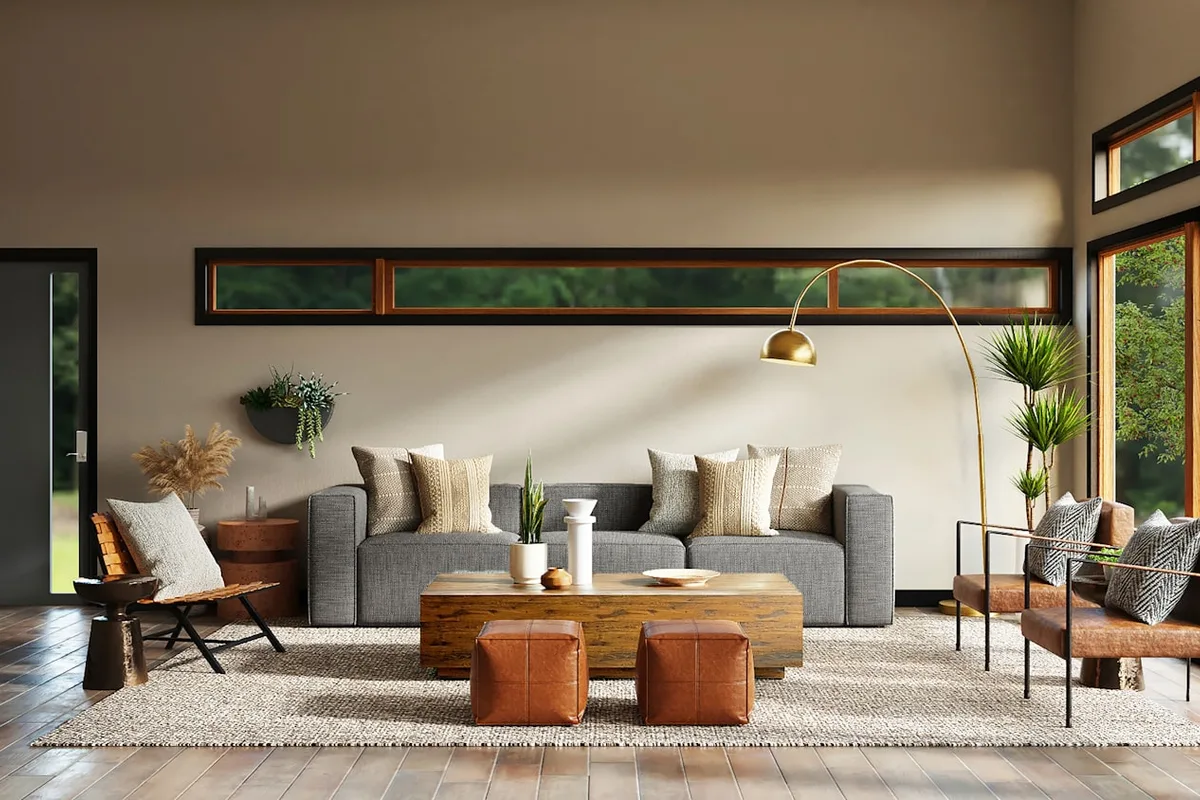
The Geometry of Quiet Rooms
How negative space, daylight, and a single axis of furniture can make a room feel finished without feeling full.

Type That Holds a City Together
Why wayfinding, newspaper mastheads, and subway maps still teach the best lessons in hierarchy.
Summer Light, Winter Grids
On designing for season and why the best editorial systems change with the months.